Better data drives better AI results
Get your data ready for AI


We’ve learned a lot about AI in 2023. We’ve seen the technology perform tasks we once only dreamed of, we’ve experienced its limitations and, unfortunately, we’ve met its dark side. AI for business has shown its potential to transform data into better decision-making tools—something every organization can benefit from.
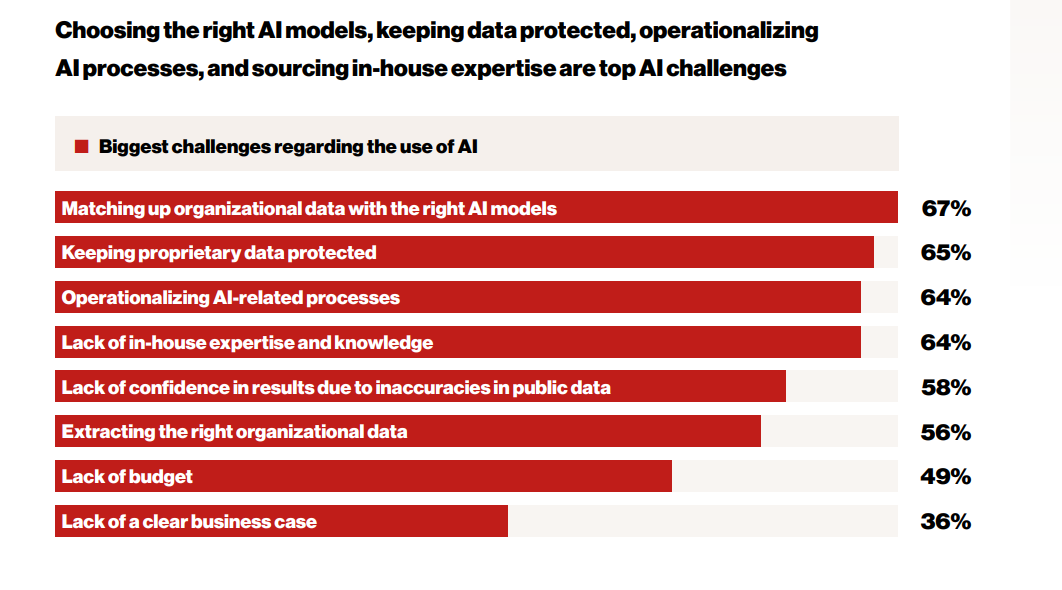
But we’ve also learned that, since AI relies on data to learn and improve, data must be ready for AI. If it’s not accurate, reliable, and well-organized we’re not likely to get the results we want. In fact, in the recent CIO MarketPulse research survey conducted for OpenText, respondents listed data-management issues at the top of their AI challenges.
Get ready
The fact is that game-changing AI results can only be achieved when the underlying data is reliable—even the best data scientists money can buy won’t be able to produce the desired results without trustworthy data. To maximize the value of AI, you must first maximize the value of your data.
What’s at risk if you don’t adequately prepare your data so your AI initiatives don’t turn out well? A majority—78%—of CIO MarketPulse survey respondents said not taking advantage of AI would mean they couldn’t make the most of their data. In other words, they wouldn’t be able to fully tap into their organization’s most valuable asset—corporate data—to deliver the actionable insights needed to get ahead. All that for nothing.
Start here
To avoid wasting time, money, and resources on AI initiatives your data isn’t ready for, take these steps to build a modern information management foundation.
1. Find the needed information
Information is omnipresent and more distributed than ever. With your AI use cases in mind, conduct an audit of existing data assets—structured, unstructured, in the cloud, on premises, anywhere, any type. Identify the sources, formats, and quality of data available within your organization to feed the learning models. This assessment will help you form the foundational knowledge base for your AI assistant.
2. Define data-governance standards
AI puts the responsibility on everyone in the organization to defend data privacy and governance, from spotting hallucinations to redesigning processes in order to avoid fabricated outputs. The potential for fallacies to seep into the enterprise is real and we all need to play a role in preventing the side effects. Just like we’ve learned to set rules for data governance, now we must define the protocols by which we’ll enable information flows and interpret results from AI.
3. Automate always-on data integration
AI has advanced our relationship with data so that we will never be able to go backwards to stagnant information. This means organizations need a strategy and ongoing process to integrate disparate datasets from various sources into a unified format suitable for AI analysis. This could mean continuously extracting data from one platform; bringing in data from the edge; consolidating and organizing information; and feeding learning data from AI models back into the knowledge base for AI. Without this constant aggregation, AI assistants will lack the foundation to be useful and relevant.
4. Secure information flows
Last year, according to the OpenText Cybersecurity Threat Report, 87.5% of malware was unique to one PC. This means that even if organizations have high security intelligence, individual actions may be the most vulnerable point of attack for businesses. With this in mind, companies must implement measures to ensure data security and information quality. From proactive validation checks to AI-led threat detection, organizations must ensure their information management practices align with regulatory requirements and industry standards.
5. Create new ways to have a conversation with your information
Every job in every function can be reimagined with AI and conversational search interfaces. Think about how an AI assistant can help easily access relevant datasets by tapping into multiple knowledge bases. AI powered by information management allows you to utilize the best algorithms for the job and let employees explore and digest data independently.
Harnessing the full potential of AI requires organizations to prioritize effective information management. By laying a strong foundation through robust data governance, integration processes, and data quality assurance, you can pave the way for successful AI adoption.
Learn more about how smarter AI starts with smarter information management, and how AI for business solutions from OpenText can help you reimagine the future of work.