AI-to-AI integration: the next step for AI content management
AI-to-AI integration is redefining AI content management. See how OpenText Content Aviator delivers content integration inside Copilot and Agentforce

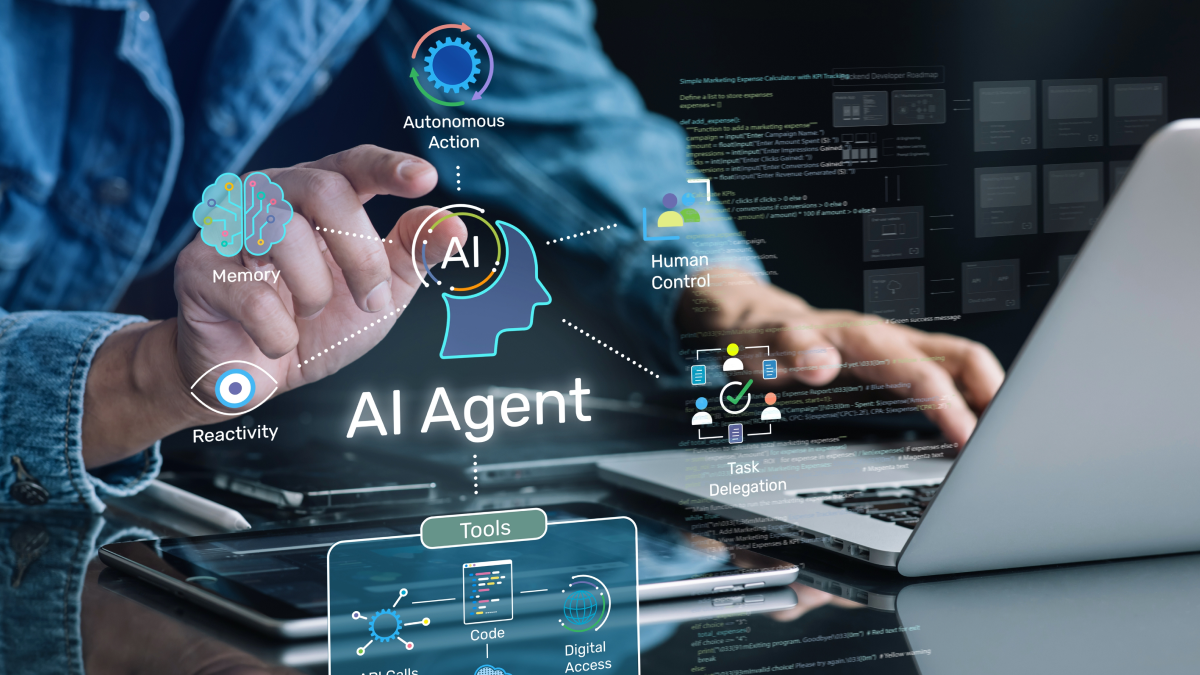
Your employees switch between a dozen applications every day: Salesforce, Microsoft 365, SAP, and more. The content they need to do their jobs is scattered across every one of them. Every app switch breaks concentration, and every new AI chat window starts the search over again.
AI-to-AI integration solves this, and it’s changing what AI content management looks like inside the enterprise. Instead of asking employees to open yet another assistant, an AI content assistant connects the AI tools already built into their daily applications, like Microsoft Copilot or Salesforce Agentforce, directly to the governed content that lives in your content management system. The employee never leaves the app they’re working in. The AI assistant gets the context it needs to give a real answer instead of a guess.
This post breaks down what AI-to-AI integration means, why fragmented content and AI sprawl are blocking real productivity gains, how OpenText™ Content Aviator makes AI content management work across applications, and what content integration looks like in practice inside Salesforce Agentforce.
The real cost of switching apps and AI chats
Every knowledge worker knows the pattern. You’re in Salesforce, and the answer you need is in a document management system. You’re in Teams, and the context is buried in a claims record. So you switch. You search. You copy and paste. You switch back.
The scale of the problem is now measurable. 63% of employees identify tool fragmentation, using too many applications that do not integrate, as their single biggest technology obstacle.¹ 34% of employees report difficulty finding the information they need to do their jobs.² Staying “in the zone” and keeping a natural flow of work is critical to productivity, and constant app switching is the biggest thing standing in the way.
Now layer AI on top. A separate AI chat window for every application means a separate place to ask questions, a separate place to lose your train of thought, and a separate place where the assistant has no idea what you were just looking at. More tools were supposed to make employees faster. In practice, they’ve added a new tax on their time. Content integration, not more assistants, is what closes the gap.
Why more AI assistants haven’t fixed content integration
The instinct in most organizations has been to add more AI assistants. Every application vendor has one. Every function wants their own. The result is a growing pile of standalone assistants that each know a slice of the business and none of the whole.
The data reflects the limits of that approach. Even among the 49% of employees who use AI tools specifically to find data, 36% still struggle to access relevant information because the underlying content is siloed or unmanaged.2 An AI content assistant is only as useful as the content it can reach. Plug it into a silo, and it answers from a silo.
IT leaders see the second problem coming. 70% of IT leaders are worried about “agent sprawl” within their organization, creating an urgent need for multi-agent orchestration and governance.3 Ten different AI assistants, each with its own permissions model, its own view of the data, and its own risk profile, is not a strategy. It’s a governance nightmare waiting to become an audit finding.
The fix isn’t another standalone assistant. It’s making the AI content assistant that lives closest to the content, and the assistants employees already use, work together under the governance controls the business already trusts.
What is AI-to-AI integration?
AI-to-AI integration connects a content-aware AI assistant to the AI experiences built into the platforms people already work in, so one assistant can draw on another’s knowledge without a human relaying information between them. Instead of a knowledge worker manually feeding context into Copilot or Agentforce, the integration passes governed business content directly to those assistants in real time.
The market is moving fast in this direction. 52% of organizations expect to adopt or expand “AI-to-AI integration across applications” within the next 6 to 12 months.4 This is no longer an emerging pattern. It’s becoming the default architecture for how enterprises plan to deliver AI content management at work.
For regulated and high-compliance environments, AI-to-AI integration is the only viable option. Content can’t be exposed to any AI assistant without controls, and employees can’t be trusted to remember which content belongs where. Content integration through AI-to-AI keeps information governed and secure while still making it accessible in the flow of work, wherever that work happens to be.
How Content Aviator delivers AI content management across your apps
OpenText™ Content Aviator is the AI content assistant that sits on top of OpenText document management solutions. It’s the foundation for AI content management across the enterprise. From there, it extends outward.
Content Aviator connects to the AI experiences your employees already use every day, including Microsoft Copilot, Salesforce Agentforce, and SAP Joule. Rather than replacing those assistants or asking employees to adopt a new one, Content Aviator becomes a natural extension of their daily work. It gives Copilot, Agentforce, and Joule secure, grounded access to the content stored in your OpenText environment, so those assistants can answer with real business context instead of generic output.
The content integration architecture is straightforward:
- Foundation: OpenText Content Management and Core Content Management organize business content into structured workspaces.
- Bridge: Content Aviator, the AI content assistant, sits on top and understands how that content connects to your business.
- Assistants: Copilot, Agentforce, and Joule draw on that context directly, inside the applications employees already have open.
The result is one continuous line from governed content to the assistant an employee is already talking to, with no app switching in between. The governance model does not change. The user experience does.
See the AI content assistant in action
In the demo, a Salesforce user asks Agentforce a question, and Content Aviator gathers workspace insights from a stored document to surface expert opinion conclusions, without leaving the Salesforce screen. From there, the user asks Agentforce to create a contact record. Content Aviator supplies the context, the record gets created, and the contact appears in the workspace automatically. The same conversation continues into drafting and sending an email, and into applying an AI-generated summary directly to a record’s details.
None of it requires a separate tab, a separate login, or a separate AI chat. The employee stays in Salesforce. The AI content assistant does the connecting behind the scenes. The same pattern applies inside Microsoft Copilot and SAP Joule. The assistant on screen changes. The governed content foundation does not.
The business case for AI-to-AI integration
Content Aviator knows your content and how it fits into your business, which means the assistants it connects to aren’t answering from a narrow, single-app view. A standalone AI assistant working in isolation only knows what’s in front of it in that one application. Content Aviator draws from a unified pool of governed content across the business, so the answers Copilot, Agentforce, and Joule give back are richer, more accurate, and more useful for the decision at hand.
That difference is starting to show up in hard numbers. Organizations utilizing over 10 integrations to connect their systems report more than 30 hours of additional productivity per person per week.5 Decision-makers report a 28% to 30% improvement in employee output and an average annual cost reduction of 23% to 25% after implementing integrated AI solutions.
The gains show up first in the functions that live and die by content velocity. Organizations are aggressively prioritizing AI-enhanced integration in Data/Analytics (60%), Finance/Accounting/Procurement (53%), Customer Service (43%), and Human Resources (38%).6 These are the same teams where resolving a claim, closing a deal, or serving a customer moves faster when the AI content assistant already has the right context, instead of asking the employee to go find it.
The pattern is consistent across use cases. Faster claim resolution in insurance. Shorter deal cycles in sales. Better first-touch resolution in customer service. In each case, the assistant is already there. Content integration is what gives it something useful to say.
Bring an AI content assistant to every app your employees use
AI-to-AI integration isn’t about adding another tool to an already crowded application list. It’s about making AI content management work where the work already happens, by connecting the AI assistants employees already rely on to governed, AI-ready content through OpenText™ Content Aviator.
Activate knowledge faster. Keep employees on task and in context. Give them an AI content assistant in whatever app they work in, every day.
Sources:
- S&P Global Market Intelligence, 2025.
- Gartner, Market Guide for Enterprise AI Search, September 2025.
- Gartner, Key Insights from the 2025 Microsoft 365 Copilot Survey, ID G00833379, June 2025.
- Foundry Research, MarketPulse Survey: The Role of Gen AI in Modernizing Content Management, May 2025.
- IDC, FutureScape: Worldwide Future of Work 2026 Predictions, October 2025.
- Foundry Research, The Role of Gen AI in Modernizing Content Management, May 2025.