Beyond the AI hype: What Gartner Supply Chain Symposium/Xpo™ 2026 in Barcelona revealed about the future of supply chains
Gartner Supply Chain Symposium/Xpo™ 2026 in Barcelona was full of AI talk, but the real story was how supply chains must fundamentally change to turn pilots into scalable value. In this blog, I share ten practical takeaways on data, operating models, ecosystems, networks, and decision-making for the next generation of supply chains.


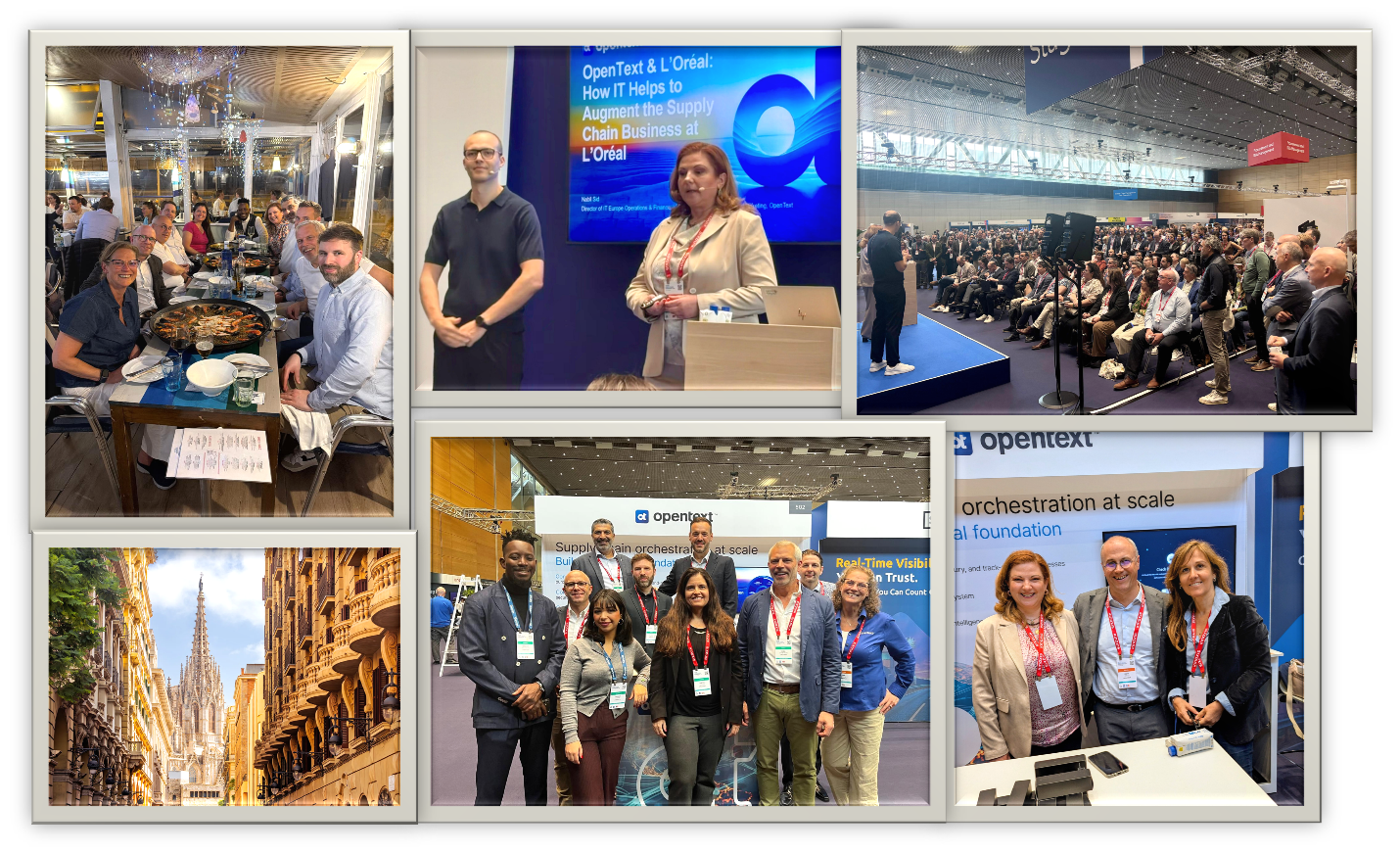
Gartner Supply Chain Symposium/Xpo™ 2026 in Barcelona brought together more than 2,000 supply chain leaders, 50+ Gartner analysts, and hundreds of sessions spanning AI, orchestration, logistics, procurement, resilience, and talent. I arrived expecting an AI-heavy agenda full of tools, demos, and bold claims, and in many ways that expectation was met. AI framed a lot of the discussions, but as the week went on, it became clear that the most interesting conversations were not about AI in isolation. They were about how to redesign supply chains so they can actually benefit from AI in a sustained, scalable way.
In more than one session, the room made clear that enthusiasm for AI is still running ahead of organizational readiness. That gap showed up repeatedly, whether the conversation was about data, operating models, governance, or decision-making. The examples varied, the industries differed, and the vendors showcased different capabilities, but the same themes kept resurfacing.
1. Pilots are easy: Scaling value is the hard part
Across sessions, you could sense that most organizations no longer struggle to launch AI pilots. They know how to experiment, build prototypes, and run proofs of concept. The real challenge is turning those pilots into something durable that changes how the supply chain actually runs. Moving from local experiments to global impact, across regions, business units, and partners, is where many programs still stall.
2. Data foundations still decide what is possible
One point came up so often it almost became background noise: AI outcomes are constrained by the reality of enterprise data. Nobody pretended that perfect data is realistic, but there was strong agreement that data must be trusted, governed, and good enough for the decisions it supports. The organizations making visible progress tend to know which data domains really matter, who owns them, how quality is defined, and where weaknesses are holding back AI-enabled decision-making.
3. Operating models are now the bigger bottleneck
Several analysts and customer speakers were very honest about why AI initiatives get stuck. The blockers are less about algorithms and more about trying to plug new intelligence into old operating models. When roles, incentives, KPIs, and governance stay the same, the technology is forced to work around legacy structures. The more advanced examples came from companies that rethink how decisions are made, how responsibilities are shared, and how humans and intelligent systems work together day to day.
4. Humans still anchor the critical decisions
Even with all the talk about autonomy and agents, there was a consistent acknowledgement that people remain central, especially in complex, multi-party supply chains. Human judgment still matters in ambiguous situations, governance still requires accountable leaders, and strategic relationships still depend on trust built over time. What is changing is how people spend their time: less on repetitive manual work, more on scenarios, exceptions, negotiations, and high-impact trade-offs.
5. Orchestration is the next step beyond visibility
For years, visibility has been the big ambition: more data, more dashboards, more alerts. In Barcelona, the focus shifted toward what actually happens once visibility improves. The differentiator is orchestration, i.e. the ability to coordinate actions and decisions across functions, regions, partners, and systems in a consistent way. The strongest stories showed how planning and execution are being connected, how internal processes and partner workflows are aligned, and how local moves are linked to global outcomes.
6. Ecosystems now shape competitive advantage
Another strong theme was the growing importance of ecosystems. Supply chains increasingly operate as networks of suppliers, logistics providers, manufacturers, customers, and technology partners that are deeply interconnected. In this environment, competitive advantage depends on trust, shared objectives, and governance models that extend beyond a single enterprise. Many of the big challenges like resilience, sustainability, responsiveness, simply cannot be solved effectively by one company working alone.
7. Networks are becoming strategically decisive
Closely related to the ecosystem theme was a very direct message about networks. A supply chain’s performance is now heavily influenced by the quality of its connections: how easily partners can onboard, how reliably they exchange data, how quickly they can collaborate around issues, and how intelligence flows across the network. Connectivity on its own is no longer enough. In a networked economy, connections are no longer just infrastructure but real strategic assets. The strategic edge will come from networks that support collaboration, embedded intelligence, and coordinated execution, not just message transport.
8. Systems of record are turning into systems of action
Traditional enterprise platforms have historically focused on capturing and recording transactions. What came through in several sessions and demos is a shift toward systems that help users decide and act. The newer capabilities recommend actions, coordinate responses across teams, automate routine decisions, and guide people toward outcomes instead of only reporting on the past. The conversation is moving from “What happened?” to “What should happen next, and who needs to do it?”
9. Agentic AI is promising but still early
Agentic AI understandably attracted a lot of interest. The idea of agents that can plan, coordinate, and execute tasks across multiple systems and partners is very appealing in complex supply chain environments. At the same time, the overall tone stayed pragmatic. Traditional AI is already delivering value, generative AI is maturing quickly for specific scenarios, and agentic AI is still in the early stages of practical deployment. The signal for leaders: build on what is mature today while exploring agentic approaches and preparing the foundations they will require.
10. Decision-making is becoming a designed capability
Beneath the focus on data, AI, and platforms, there was a subtle but important shift: decision-making itself is being treated as a capability. Many organizations have plenty of analytics and dashboards but still struggle with consistent, high-quality decisions at scale. The more advanced stories came from companies that explicitly map their key decisions, define how they should be made, clarify who is involved, and design how AI-enhanced insights feed into that flow. In the next phase of supply chain transformation, decision flows will matter as much as data flows. That discipline is starting to separate those who simply see more from those who actually act better and faster.
How I walked away from Barcelona
I went into the conference expecting a long list of loosely connected trends and came home with a much more coherent picture. The future supply chain that emerged from these conversations is more autonomous, more connected, more ecosystem-driven, more data-dependent, and still very human at its core. Technology will shape what is possible, but it will not decide the winners on its own. The organizations that move ahead will be the ones that rethink how people, processes, partners, and intelligent systems work together across the network to create value and not just within their own four walls.
For companies operating across complex, multi-enterprise environments, this is also where networked platforms and orchestration capabilities become strategically important. That, for me, is the real story behind all the AI talk: not the technology on its own, but the opportunity—and the challenge—of redesigning supply chains for a very different future.