Technical debt slows modernization: Why integration complexity drives hidden costs and AI risk
Technical debt tends to build quietly over time, until it starts slowing everything down. From delayed ERP projects to AI challenges, integration complexity can impact far more than IT. Here's what supply chain leaders need to know.

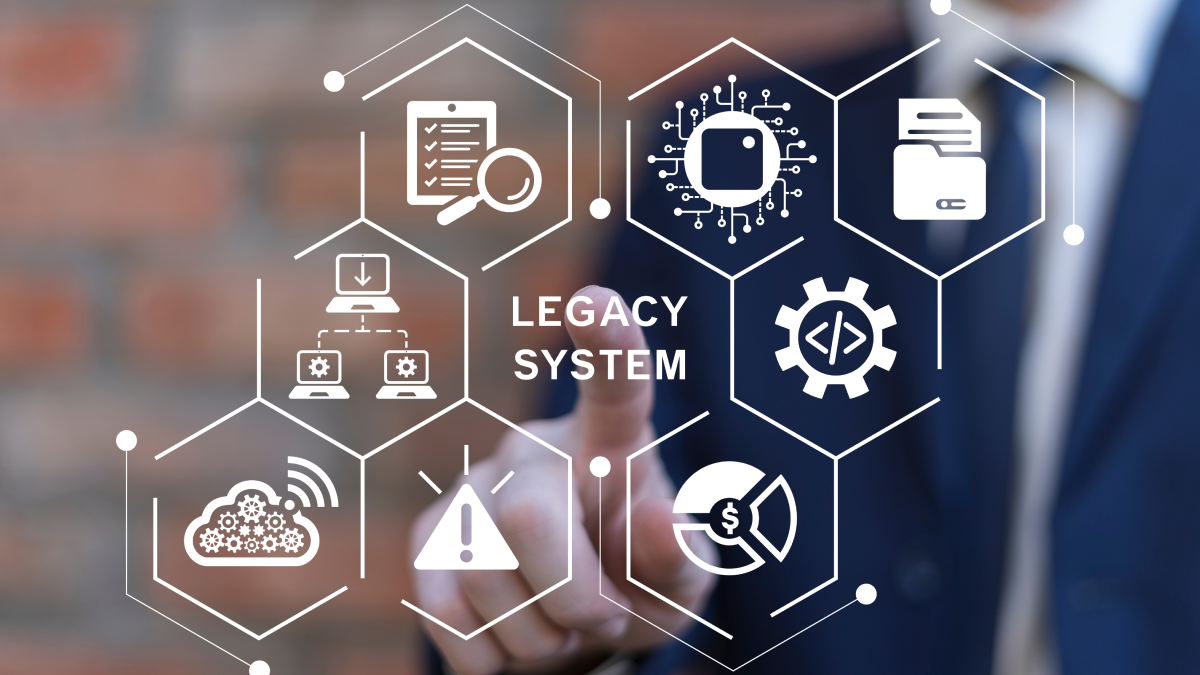
Ask almost any supply chain leader what’s keeping them up at night and you’ll hear a familiar list: ERP modernization projects, onboarding new trading partners, growing customer demands, AI initiatives, and pressure to do more with fewer resources. The challenge isn’t simply managing more change but doing so with increasingly complex technology environments. For many businesses, the biggest obstacle isn’t supply chain disruption.
OpenText often sees organizations supporting integrations that were built 10 or even 15 years ago. Nobody designed the environment to become complex. It simply evolved that way as teams responded to business needs, acquisitions, customer requirements, and technology changes over time.
Your supply chain is only as resilient as its integrations
At OpenText, we hear in customer conversations every day how their technical debt accumulated gradually: an ERP customization was added years ago…a point-to-point partner connection was built to meet a deadline…multiple EDI platforms were acquired through mergers…legacy integration tools continue to run because replacing them feels too risky.
These decisions all made sense at the time, but over the years, each decision created a fragmented integration landscape that is now hard and expensive to manage every year.
For businesses with supply chains, the tech debt impact extends far beyond IT. Integration complexity slows partner onboarding, delays ERP upgrade projects, increases operational costs, limits visibility, creates manual workarounds, and makes it difficult to respond quickly when disruptions occur. It also makes it difficult to make everything AI-enabled.
How integration sprawl can create business problems
Growth tends to introduce complexity in predictable ways. New customers require new connections. Suppliers may use different communication standards. Business units adopt specialized applications. Before long, IT teams are supporting an ever-expanding web of integrations that becomes increasingly difficult to maintain.
Without a scalable integration strategy, every new connection introduces more complexity, resulting in a patchwork of EDI, APIs, custom integrations, spreadsheets, manual processes, and aging platforms that are increasingly unmanageable.
Your architecture is likely to create a roadblock to AI-enablement
Many businesses want to use AI within their supply chains, for example, to better manage inventory, gain more operational visibility, and be more responsive to potential problems. The challenge is that AI can only work with the data it can access. If information is scattered across disconnected applications, spreadsheets, and legacy systems, even the most advanced AI initiatives will struggle to deliver meaningful results.
This is why legacy integration challenges have become more than an IT issue. Disconnected systems create data silos. Data silos limit visibility. Limited visibility restricts automation and AI effectiveness. If you are hoping to leverage AI, you must first address integration complexity and how it might be preventing information from flowing across your business and IT ecosystem.
Modern supply chains require simpler integration architectures
The most resilient supply chains are moving away from fragmented integration environments toward more connected digital ecosystems. Rather than managing dozens of disconnected platforms and point solutions, modern supply chains focus on:
- Consolidating integration technologies
- Standardizing partner connectivity
- Improving data consistency
- Creating a foundation for automation and AI
- Increasing visibility across the supply chain
But the path forward doesn’t happen overnight. The days of plug-and-play architecture are over. Modern supply chains require foundational improvements in data governance, data access, data integration, business operations, and supply chain automation.
Modernization is an opportunity to simplify
ERP upgrades, cloud migrations, mergers and acquisitions, divestitures, and platform replacements all create moments of change. These initiatives introduce short-term disruption but also provide an opportunity to address years of accumulated technical debt.
Forward-looking businesses use modernization initiatives to:
- Replace or eliminate aging integration platforms or redundant systems
- Simplify partner and customer connectivity
- Improve operational and supply chain visibility
- Create AI-ready data foundations
Instead of carrying legacy integration challenges forward into a new environment, isn’t it time to use modernization to simplify and strengthen your supply chain?
How to design for innovation during unpredictable changes
Modern supply chains depend on trustworthy, connected information moving seamlessly between people, processes, applications, and partners. Organizations that use modernization initiatives to simplify integration are often better positioned for long-term growth and AI initiatives.
OpenText™ helps organizations reduce integration complexity and build a more connected digital supply chain foundation. Our OpenText™ B2B Integration Enterprise, OpenText™ B2B Integration Foundation, and OpenText™ B2B Integration Essentials can help you simplify integration across your business processes and IT ecosystem, so you can improve visibility, resilience, and AI-readiness all at once on a global scale.
Talk to an OpenText™ Business Network integration expert to learn more.