OpenText OpenStudio: How ECO Style turned EDI from a budget burden into a business advantage
ECO Style's CTO shares how moving EDI to OpenText cut costs, solved 856 compliance gaps and opened the door to supply chain data insights.

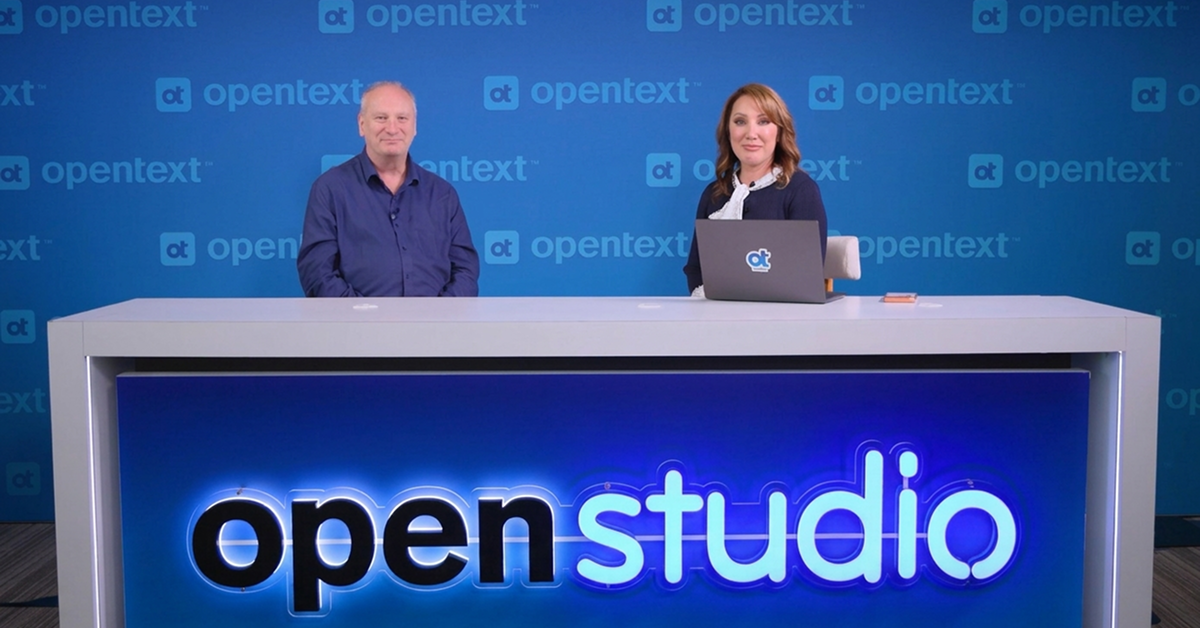
What happens when EDI stops being a cost center and starts being a source of insight? Tony Baldwin, CTO of ECO Style, shares his story with Technology Strategist, Lisa Martin in this OpenStudio conversation. Before OpenText, EDI consumed at least a third of ECO Style’s budget and compliance gaps were stopping business. Today, Tony sees EDI trading partner data as one of the most underused sources of business insight, and he’s just getting started.
Watch the full interview
Three key takeaways
- EDI is mission critical, and it was costly. Tony Baldwin shares that before OpenText, EDI took at least a third of ECO Style’s budget, and the CFO reminded the team about it daily.
- Compliance can make or break a retail relationship. ECO Style’s previous partners couldn’t implement the 856 advance ship notice, which meant some customers simply wouldn’t accept shipments.
- The next chapter is data. Tony sees trading partner data as one of the most underused sources of insight, especially when it’s paired with point-of-sale data to validate inventory and spot diversion and counterfeits.
Why was EDI so hard to manage before OpenText?
According to Tony Baldwin, EDI isn’t a nice-to-have. It’s absolutely critical to ECO Style’s business. It was also expensive. Tony says it took “at least a third of our budget,” and that the CFO raised it on a daily basis. It was a big chunk of the team’s time, effort and budget. “It was a big chunk of our time and effort and budget,” says Tony Baldwin. Think of it as running a critical business function that never stops asking for more.
What did 856 compliance mean for ECO Style’s retail partners?
The 856 is an advance ship notice. Tony explains it as telling the customer what’s about to go on the truck so they can plan their logistics. The challenge was that the partners ECO Style worked with at the time could not implement it.
“So not only was it a challenge, it stopped business that they just wouldn’t accept shipment from us,” says Tony Baldwin. In other words, a compliance gap wasn’t just a technical issue. It put shipments, and relationships with retailers, at risk.
Why did ECO Style choose OpenText?
Time pressure was a factor, and so was proof. Tony recalls asking whether OpenText was a proven partner, whether they had done it before and who they had done it with. His answer is direct: OpenText as a partner “absolutely delivered.” Tony’s takeaway: when the clock is ticking and shipments are on the line, experience matters.
How could trusted EDI data change the business next?
Looking ahead, Tony sees a big opportunity in data ECO Style already has. He calls trading partner data “one of the most underutilized sources of” data, and says the team has only started scratching the surface. Shipment data can show who an order went to, how quickly, whether they reordered, and how that affected inventory.
“We really have just started scratching the surface as to really getting in and honing that data and combining it with data that we get from POS point of sale system data to really have a good validation of what stores are telling us is really reflective in our inventory,” says Tony Baldwin.
That combined view can help the team look at things like diversion and counterfeits, and confirm products are reaching the right customer at the right time, which Lisa Martin calls “a business imperative.”
Explore the evidence and related reading
- Customer evidence: EDI Customer Success Story: ECO Style Corp LLC shares more on ECO Style’s work with OpenText.
Take the next step
Start by asking where your EDI data is working hardest, and where it’s sitting idle. Explore OpenText™ B2B Integration Enterprise to see how trusted B2B integration can support your retail and trading partners. For more perspectives, watch another interview in the OpenStudio series.
Full interview transcript
The full interview transcript is reproduced below without changes.
Introduction
Lisa Martin: Did you know that behind the hair care products on shelves are this huge network of complex network of business transactions that are connecting manufacturers to retailers? I didn’t think about that, but luckily we’re thinking about it now. ECO Style is here and they are such a great example of the concept OpenText everywhere. So what we’re doing here is technology here is behind the scenes. It’s helping keeping information flowing, it’s really enabling retail partners to connect, and it’s ultimately getting us consumers what we want in our hands. I’m Lisa Martin and I’m joined by Tony Baldwin, the CTO of ECO Style. Tony, great to have you. Thank you so much for joining us.
Tony Baldwin: Yeah, thank you.
The business challenge
Lisa Martin: So, let’s kind of peek at the business challenge. EDI mission critical, right? It’s not nice to have. It is absolutely critical. But before OpenText, it was pretty much consuming a lot of your budget.
Tony Baldwin: It was at least a third of our budget, very critical. We would hear about it from the CFO on a very daily basis, you don’t want that. So but yes, it’s a it, it was a big chunk of our time and effort and budget, yeah.
856 compliance
Lisa Martin: But there was also some compliance challenges. Walk me through what 856 compliance is and what some of the challenges were presented by the old scenario.
Tony Baldwin: Yeah, 856 really it’s so that’s advance ship notice and it’s basically saying, hey, this is what we are getting ready to send you, Mr. Customer. This is what’s going on the truck. They need to know for their logistics planning and the big challenges that we had is the current partners we were working with could not implement 856 for us. So not only was it a challenge, it stopped business that they just wouldn’t accept shipment from us.
Choosing OpenText
Lisa Martin: So, walk me through OpenText. Why did they become the obvious right partner to really help you come in and erase some of those challenges and simplify even improving collaboration.
Tony Baldwin: There was a time pressure. There was this a proven partner? Have they done it before? Who have they done it with and OpenText as a partner absolutely delivered.
Looking ahead
Lisa Martin: So as you look into your crystal ball, look into the future, how could greater visibility into the supply chain, access to that trusted business data, that keyword is imperative. How could it to help you make better decisions and really kind of identify new opportunities to take the business in?
Tony Baldwin: Yeah, that’s, it’s a good question. I think one of the most underutilized sources of day-to-day is EDI data, that trading partner data. Yeah, we look at it as far as shipments going out, but who did it go out to and how quickly and did they reorder again and how did that impact our inventory? We really have just started scratching the surface as to really getting in and honing that data and combining it with data that we get from POS point of sale system data to really have a good validation of what stores are telling us is really reflective in our inventory. So that looks at things like diversion, counterfeits, are we seeing the product really go all the way to the right customer at the right time.
Wrap up
Lisa Martin: And that’s a business imperative. That’s mic drop moment. Tony, thank you so much for stopping by and telling us how you’re using OpenText. What is opening up for your business so that consumers ultimately get in their hands exactly what we want. We appreciate your insights. For Tony Baldwin. I’m Lisa Martin, thank you so much for watching. We’ll see you next time. Thank you.
About OpenStudio
OpenStudio is OpenText’s media hub for thought leadership and innovation. This series explores stories of progress and success from industry experts, visionaries, and trailblazers. Our goal is to inspire, inform, and connect audiences with the people and ideas shaping the future of the digital world.