Bring your content to every AI conversation
Access OpenText Content Aviator from the AI assistant you’re working in right now—no switching required


Think about the last time you were mid-conversation with your AI assistant and realized the document you needed was in your content management system, not the chat. So you stopped, switched apps, found the file, copied some text, and pasted it back. By then, you’d lost your train of thought and the productivity AI promised to deliver.
The user focus problem is real, and it’s getting worse
Knowledge workers today toggle among an average of 12 applications: Salesforce, Teams, SAP, email, and more. Every switch fractures focus. Research shows AI-forward organizations save people an average of 2.7 hours per day — but only when AI is woven into the workflow, not treated as a separate tool.
The hardest part isn’t finding a good AI. It’s getting that AI to know what you know — the contracts in your repository, the case files in your archive, the proposals in your workspace. Without that connection, you’re still copying your own company’s content into a chat window and hoping nothing sensitive slips out.
OpenText Content Aviator was built for this. As an AI content assistant purpose-built for the enterprise, it meets you where you already are rather than asking you to go somewhere new — whether that’s Microsoft Copilot, Salesforce Agentforce, or Google Gemini Enterprise.
Stay in Copilot: Access everything
Microsoft Copilot is part of nearly every Microsoft 365 user’s workday. Its default reach for grounding is your email, chats, and OneDrive — not the governed content in your OpenText system. The contracts, HR records, regulated documents, and case workspaces your business actually runs are inaccessible to Copilot directly, meaning the final documents, with the latest information, won’t be used in your Copilot conversation unless you take action.
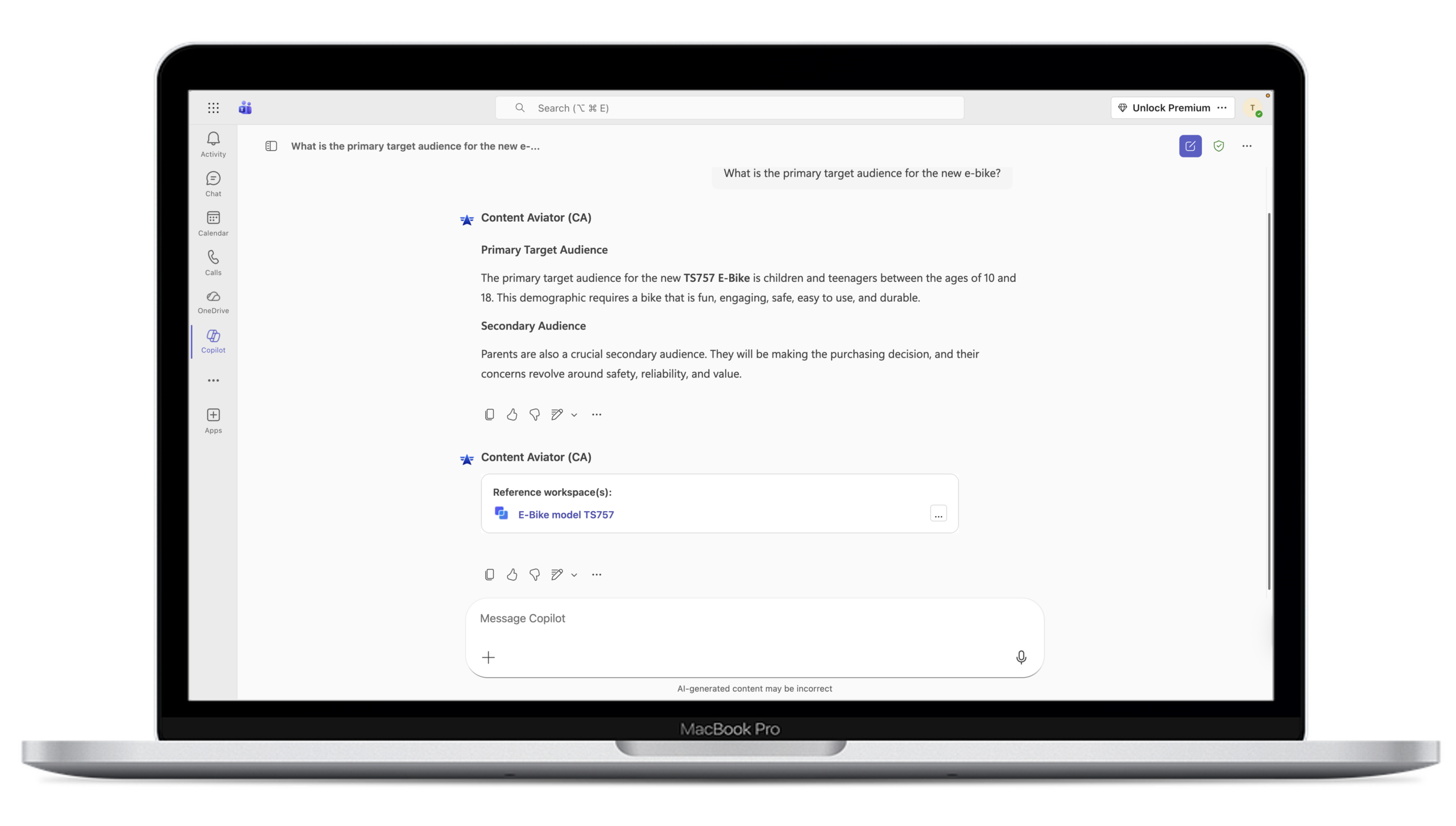
Content Aviator is integrated with Copilot, and available in the Microsoft Agent Store. Through the integration, users working in the browser, Teams, Word, Excel, or PowerPoint can easily access Content Aviator from Copilot directly within their ongoing chat and without opening a new window or copying a single document. Your train of thought stays intact, and every answer is grounded in current, predictable business documents, with your existing permissions enforced, avoiding hallucinations or off-topic responses.
Stay in Salesforce: Close the loop on every case
For sales and service teams, Salesforce is where work happens. Agentforce brings AI into that flow — but the most important context for any deal or claim may not be available from Salesforce itself. It’s in the policy documents, inspection reports, and contracts sitting in OpenText.
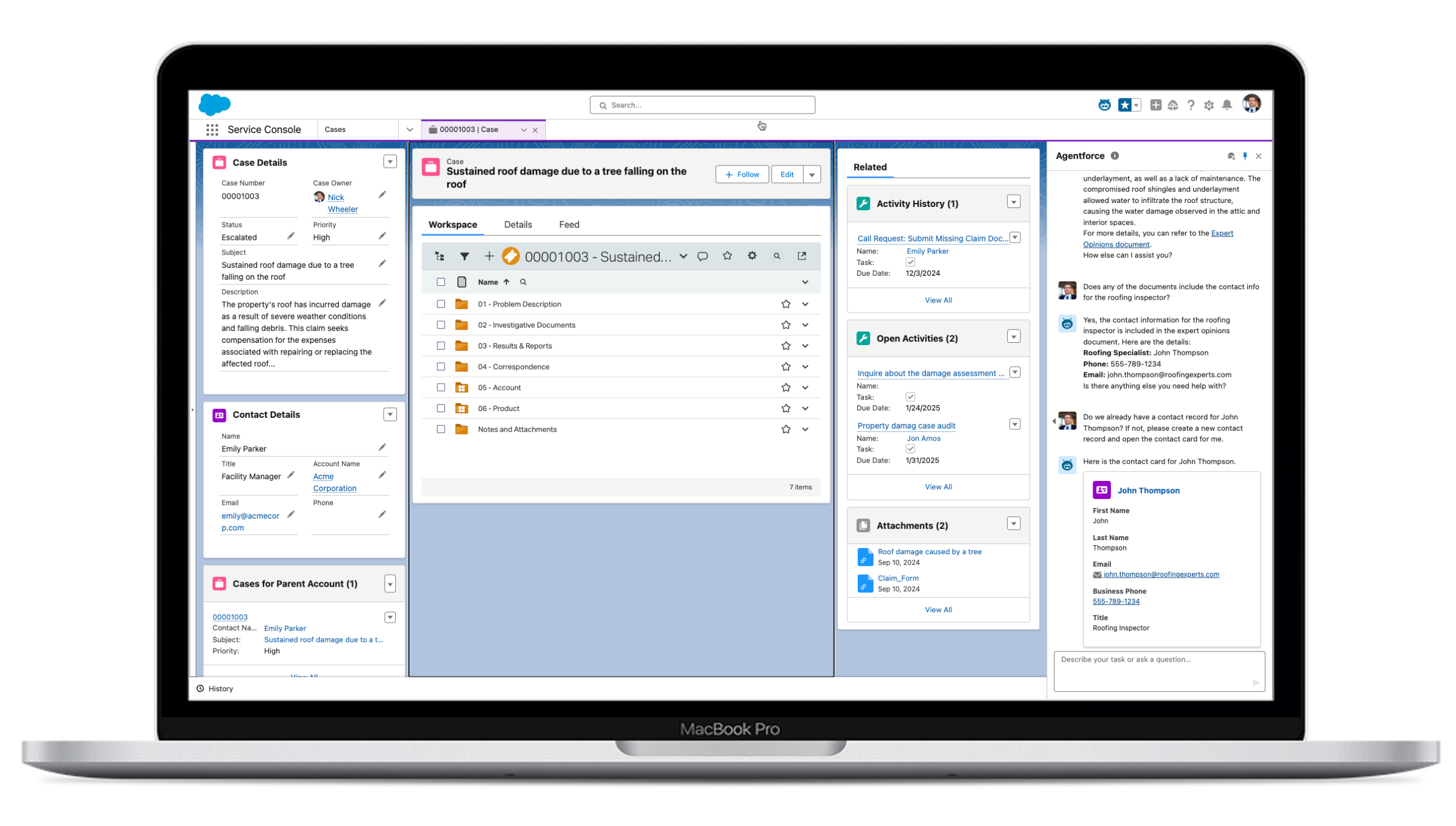
With Content Aviator on the Salesforce AppExchange and AgentExchange, Agentforce pulls from your OpenText repository and surfaces that content right inside the Service Console. A claims adjuster can ask Agentforce to summarize inspection reports and get an answer drawn from the actual case workspace — CRM context and document record together, without leaving Salesforce.
Stay in Google Workspace and work with what you know
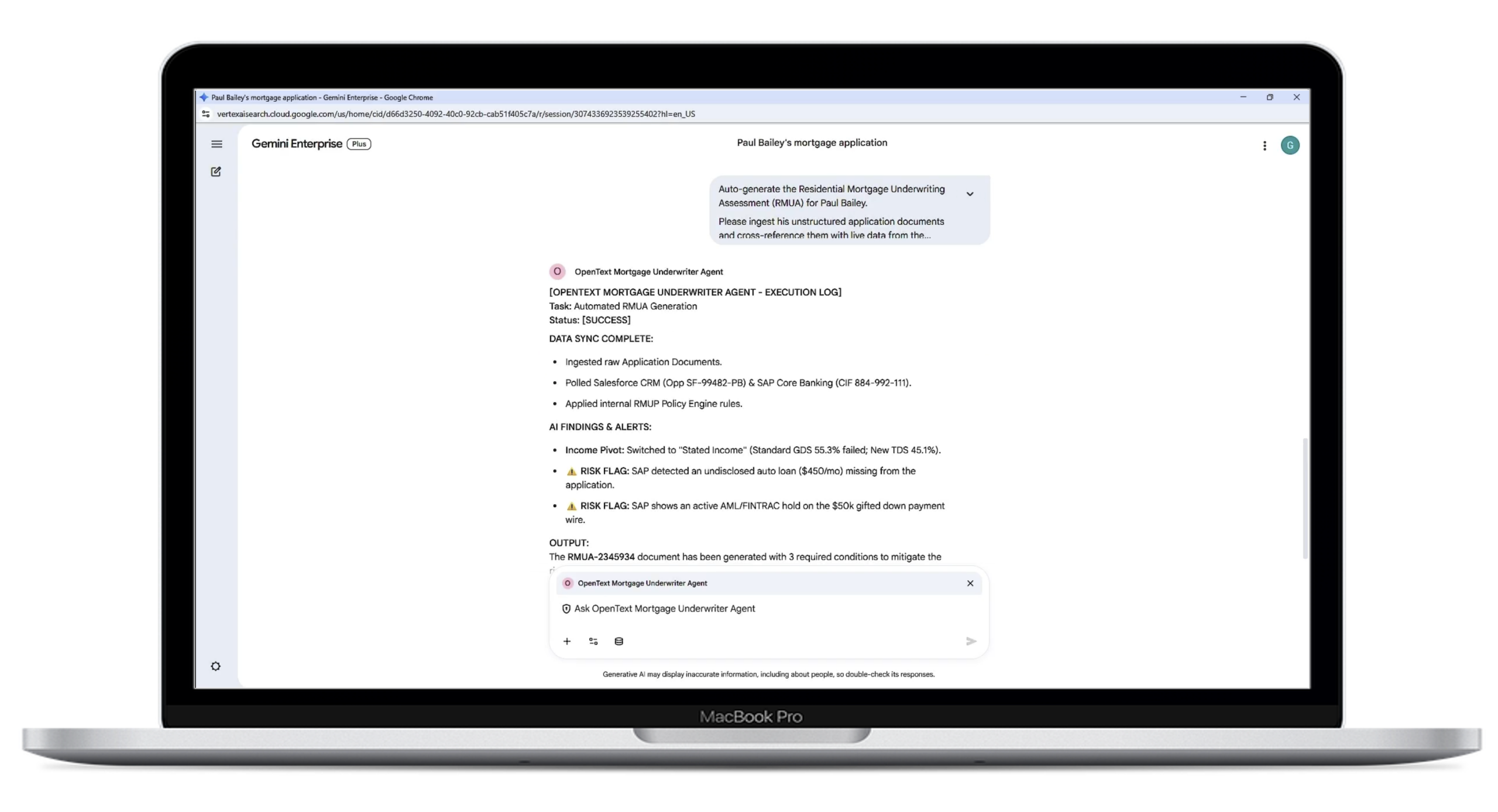
For Google Workspace customers, Gemini Enterprise is where more and more work will get done. Launched last fall as “the new front door for AI in the workplace,” Gemini Enterprise brings agentic AI into those tools. At Google Cloud Next this April, OpenText debuted Content Aviator’s latest integration with Gemini Enterprise and was featured in Google’s partner agent gallery as a validated agent inside the Gemini Enterprise app. For teams in Google Workspace, that means OpenText content becomes reachable directly from the Gemini chat interface, with permissions respected, without switching apps.
Your AI content assistant never moves your data
With each of these integrations, your content never moves from Content Aviator because of the zero-copy approach to AI grounding: it retrieves and reasons over your content inside your OpenText repository, under your existing permission model. If a user doesn’t have access to a document, the AI doesn’t see it either.
For organizations in regulated industries like healthcare, finance, insurance, and government, this isn’t just a nice feature. It’s the only acceptable way to use AI on sensitive content. For everyone else, it’s simply the smarter approach.
The AI you rely on is about to become smarter and more connected
With each integrated AI platform—whether Copilot, Agentforce, or Gemini—Content Aviator delivers secure, accurate access to your most trusted content assets. Users and the AI assistant are better informed, opening up entirely new use cases and opportunities for automation and productivity. And users no longer feel the need to copy their documents outside your organization’s firewall, exposing content to consumer AI, and possibly relying on stale or incomplete information.
OpenText Content Aviator is bringing AI-to-AI integration to many more AI platforms via A2A and MCP, as well as SAP Joule. These integrations significantly expand the role of AI in your workstreams, including financial and supply chain workflows.
Whichever platform your team calls home, the principle holds: Content Aviator becomes the content layer every AI assistant draws from, grounding the tools you already use in the documents and records your business actually runs on.
Great AI starts with great content management
OpenText Content Aviator brings that idea to life. Its AI-to-AI integrations connect the tools your teams already use to the content that actually runs your business—secure, governed, and permission-aware by design.
This is what makes enterprise AI real: not generic answers, but AI grounded in your documents, your records, and your workflows.
With OpenText Content Aviator, every AI assistant becomes smarter, more relevant, and ready to act because it’s connected to the content your business depends on.