
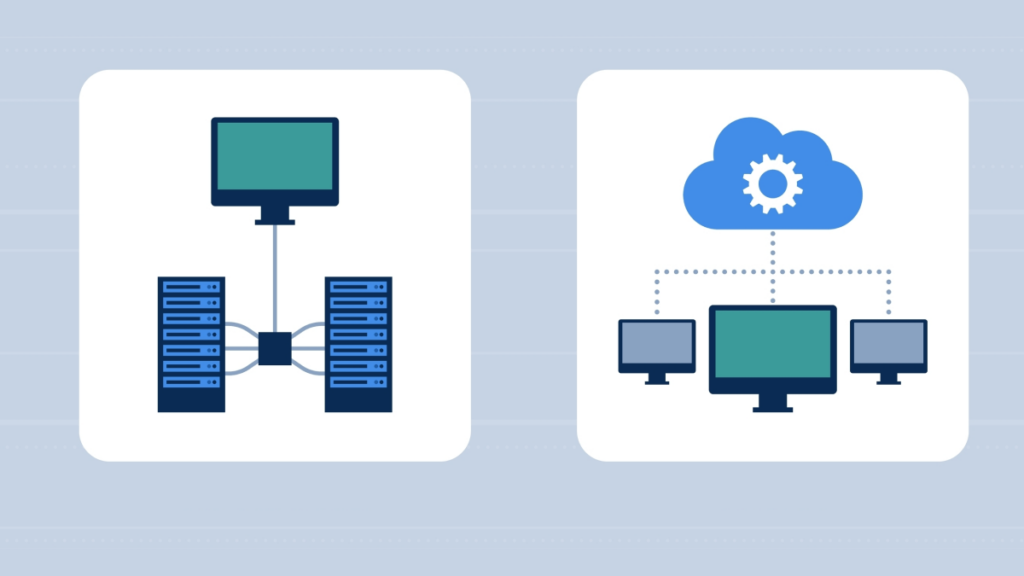
You’ve done the hard part: narrowing down eDiscovery solutions that fit your legal team’s needs. Now comes the next decision—where should it live?
Where your eDiscovery software lives isn’t just an IT decision. In 2026, organizations are reevaluating deployment models as security expectations rise, privacy regulations tighten, and cost pressures converge—and the answer isn’t always the same as it used to be.
Your deployment options include cloud, private cloud, on-premises, a portable appliance, or a hybrid combination of these. But the right fit depends on more than a preference or a trend. Deployment decisions are often shaped by:
- Past experiences
- Data residency and sovereignty requirements
- Privacy and security obligations
- Performance and scalability expectations
- Auditability and defensibility needs
- Internal IT constraints and operating models
- Cost predictability over time
If your decision on an eDiscovery product was driven by pain points from a past product experience, these issues should also align with how they might be resolved by changing the deployment strategy.
Instead of reducing the decision to “cloud vs. on-premises,” it’s more useful to think in terms of a right-fit deployment model based on your organization’s real-world constraints.

Making eDiscovery work for your enterprise
Join eDiscovery experts to find the right deployment strategy for your requirements.
When is cloud the best fit?
Cloud is often the best fit for organizations that want a fast startup, minimal infrastructure ownership, and continuous access to new features. In this model, the vendor manages hosting, administration, upgrades, and maintenance while users focus on casework.
Cloud is often a strong fit for organizations that require:
- Data operational support,
- No infrastructure overhead,
- Faster setup and startup of new projects
- Consistent access to the newest features and improvements
But aren’t limited by requirements that include:
- Internal or legal constraints to keep data fully in-house, and
- Privacy requirements that prevent non-employee access to data
Often, cloud versions of eDiscovery software come with additional features not available on-premises. If deciding between these two options, these features should be evaluated against available on-premises equivalent workflows and custom enhancements.
What makes private cloud a stronger bet
Private cloud is designed for organizations that want vendor-hosted eDiscovery while maintaining stronger oversight of access, configuration, and operational controls. Deployed in a dedicated vendor environment, it supports cloud benefits while reducing the infrastructure and maintenance load of on-premises.
This model is often a strong fit for teams that need:
- more control over daily operations than standard cloud options may allow, including end-user access,
- an environment that aligns with internal governance models, and
- flexibility for integrations and workflow design
Private cloud can be an excellent “middle path” for organizations that want cloud benefits while maintaining greater control over configuration and change management for their legal tech solutions.
Could on-premises or customer-hosted cloud be a better choice?
On-premises deployment means your organization licenses and installs the software in the environment of your choosing—whether that’s on-premises, in a customer-controlled datacenter, or within your own public cloud environment.
This is often the right choice when an organization requires:
- Customized security and access controls
- Strict governance and compliance requirements
- Full control over change management and upgrade timing
- Advanced workflow customization and automation
- Tighter alignment with adjacent systems and enterprise tooling
On-premises solutions often require greater operational maturity because your team is responsible for more moving parts. Many vendors will also provide operational services to support this transition, either on a permanent or temporary basis. With the right enablement and support model, it can be one of the most powerful choices available.
Related reading: Secure, smart, and innovative: eDiscovery solutions on-premises.
Where does the portable appliance come in?
Some scenarios require temporary, remote, or time-sensitive deployment without permanent infrastructure changes or network connectivity.
Common situations include:
- Fully air-gapped environments driven by extreme privacy requirements
- Rapid response needs in remote locations
- Investigations in infrastructure-limited environments
- Mobility across multiple controlled sites
In these cases, a vendor-provided appliance—typically a preconfigured laptop or desktop—can be shipped and activated quickly.
OpenText’s Portable eDiscovery Service is purpose-built for exactly these scenarios—learn more about how it works and when to deploy it.
Is hybrid the way?
Selecting only one deployment model isn’t always necessary. In fact, 90% of organizations are adopting a hybrid approach to their data, combining private, public, and on-premises solutions for more adaptability.
Many organizations operate successfully with hybrid strategies, where different matters, regions, or data classifications follow different models.
Hybrid advantages may include:
- Reducing hosting costs by limiting cloud data volumes
- Using cloud-only features for select document sets
- Sanitizing or redacting sensitive information before external review
Some vendors enable direct data publishing between on-premises and cloud environments, making multi-model workflows manageable rather than complex.
What to consider when migrating eDiscovery platforms
If your roadmap includes migrating from another eDiscovery platform, factor migration effort into your timeline and resourcing early. Keep in mind the following key points:
- It’s not a simple export
- Multiple redaction and production sets across the same documents will add an extra layer of complexity
- Preserving users’ saved searches may be more voluminous than it is actually useful
- Porting over analytics generated from one application to another may not be translatable since the functionality between software is often vastly different
Based on my experience, a “successful migration” isn’t just about moving data from Point A to Point B. It’s having an environment that’s ready for real work on day one—with the right templates, fields, workflows, and security controls already in place.
A defensible migration plan typically includes:
- Field mapping + template creation
- Automated export and staging (including Relativity ARM archives)
- Automated ingestion into the target platform
- Validation and workflow readiness checks before users begin review
Use this checklist to gauge migration readiness.
Migration readiness checklist
☐ Can we recreate the required templates/fields in the new eDiscovery application?
☐ Do we know what is important to preserve and what can be left behind?
☐ Do we have a validation plan to confirm the migration is successful?
☐ Do we have specific projects with enough variety to use in a pilot phase?
Following these tips will reduce manual handling, minimize surprises, and ensure a cleaner handoff to your review teams. It is always recommended to start with a small pilot to ensure the full workflow is successful before launching the migration process at full speed. OpenText™ Professional Services offers end-to-end migration services for OpenText™ eDiscovery, regardless of deployment location.
Know your alternatives and choose what fits your reality
If your primary driver is:
- Speed + minimal infrastructure → Cloud
- Balance of control + vendor hosting → Private cloud
- Maximum governance + customization → On-premises
- Air-gapped or portable need → Portable appliance
- Mixed regional or regulatory constraints → Hybrid
For many enterprises, the real answer becomes hybrid—aligning deployment with risk, policy, and operational efficiency rather than forcing a single global model.
The most important question: What needs to be true for you to succeed?
No matter which model you choose, success usually comes down to the same fundamentals:
- Clear operating processes
- Standardized templates and workflows
- Consistent user training and enablement
- Governance controls and audit readiness
- Automation that reduces manual handling and repeat errors
The platform matters, but your operating model matters more.
If you’re working through this decision right now, map your requirements to the deployment model that best fits your security, compliance, and adoption reality, not just the trend of the moment.
Also, check with your vendor on their available services. For example, our OpenText Professional Services team offers a range of enablement, project management, and technical consulting services.
Sometimes it’s helpful to have an experienced member of the vendor team work on secondment for a period while the rest of your team learns the ropes.
Want to compare notes?
If you’re evaluating deployment strategies for 2026—whether to cloud, private cloud, on-premises, portable, or hybrid—we can help map the right model to your operational and compliance requirements.
Join us for a webinar: Making eDiscovery work for your enterpriseI’m always happy to compare notes and share what a strong migration plan looks like before review teams ever log in. Contact us to set up a meeting.