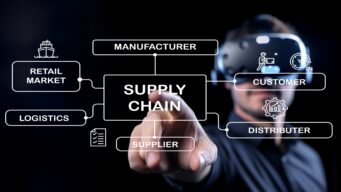
Competitive advantage in supply chains comes from the ability to interpret operational signals quickly and act before disruptions escalate.
Most organizations already have dashboards, alerts, reports, portals, and transaction monitors. Yet teams still lose valuable time jumping between EDI systems, ERP screens, emails, spreadsheets, supplier portals, and support tickets.
All of that effort often goes into answering relatively basic operational questions: Did the order go through? Why did the invoice fail? Which partner needs attention? Where is the risk emerging?
Operational data has become easier to access, while understanding its business impact and responding in time remains significantly harder.
As supply chains become more complex, distributed, and time-sensitive, traditional automation is no longer enough. Rules-based workflows and static dashboards helped companies digitize processes, but they were built for a world where humans could still manually interpret exceptions and coordinate responses.
That world is changing.
The next generation of supply chain performance will depend on intelligent supply chain ecosystems, where AI is embedded directly into the network that connects customers, suppliers, logistics providers, financial institutions, and trading partners.
From connected transactions to ecosystem intelligence
For decades, B2B integration has focused on moving documents reliably between organizations: purchase orders, invoices, ASNs, shipment notices, remittance files, inventory updates, and many other transaction types.
That foundation remains essential. But the value of a business network is no longer only in the ability to exchange transactions. It increasingly comes from the intelligence that can be created from the activity across that network.
Every transaction carries context, and every error reveals a pattern. Every delay, retry, missing document, onboarding bottleneck, or partner behavior tells part of a larger operational story.
The opportunity now is to turn that activity into intelligence that helps teams understand what is happening, why it is happening, and what should happen next.
Why generative AI changes B2B integration
Generative AI changes how users interact with complex supply chain systems.
Instead of searching across documentation, dashboards, portals, and support history, users can ask questions in natural language and receive answers grounded in trusted operational context.
But in B2B integration, AI must do more than generate generic responses. It must understand the language of supply chain ecosystems: trading partners, documents, transaction flows, mappings, errors, onboarding status, community activity, and operational performance.
That is where AI becomes more than a feature. It becomes an intelligence layer across the network.
Trading Grid Aviator: connecting knowledge, insight, and action
OpenText Trading Grid Aviator brings AI directly into the operational flow of B2B integration rather than treating intelligence as a separate layer disconnected from daily work.
The direction is clear: move beyond standalone AI experiences and create a consistent, contextual intelligence layer across Trading Grid applications and selected Business Network services. The goal is to help users access trusted knowledge, understand operational activity, and take action with less manual effort.
Trading Grid Aviator is evolving across three connected dimensions:
Knowledge
Users need instant access to trusted product, operational, and customer-specific information. Instead of searching across scattered documentation or relying on tribal knowledge, they can get contextual guidance grounded in authoritative sources.
Insight
AI must help users understand what is happening across partners, transactions, and processes. This includes natural language questions, explanations of patterns, early issue detection, and clearer interpretation of operational signals.
Action
The real value comes when AI reduces effort. That means guided task completion, intelligent recommendations, pre-filled forms, human-approved actions, and safe automation of repeatable, low-risk processes.
This is the shift from AI that answers questions to AI that helps run the network more intelligently.
AI supply chain intelligence in action
A user should be able to ask:
- Which partners are generating the most errors this week?
- Why did these transactions fail?
- Which suppliers have not sent expected ASNs?
- What changed in this trading partner setup?
- How can I onboard this partner faster?
Imagine an operations lead starting the day with an AI-generated summary of overnight activity across suppliers, orders, and transaction flows. Instead of manually reviewing dashboards and support queues, the team immediately sees that a critical supplier has stopped sending expected ASNs, understands which shipments and customers may be affected, and receives recommended next steps before the issue escalates into a downstream disruption.
Over time, the experience becomes even more powerful. AI can surface findings in dashboards without the user asking, explain anomalies, summarize daily operational activity, support error analysis, recommend next steps, and trigger workflows where appropriate.
The point is not to replace human expertise but to make expertise easier to access, scale, and apply across the ecosystem.
In operational environments where reliability, compliance, and accountability matter, AI must also be explainable, secure, and introduced with appropriate human oversight rather than functioning as an uncontrolled black box.
Over time, AI in Business Network environments will move beyond conversational assistance alone. Intelligent agents will increasingly support operational execution itself: monitoring transaction flows continuously, identifying anomalies before failures occur, triggering recovery workflows, validating transactions in-flight, and exposing reusable intelligence services that can participate in broader automation frameworks.
From AI features to AI-native supply chain ecosystems
The future of AI in supply chain is not another disconnected tool.
It is an operating model where intelligence is available where people already work: in transaction monitoring, partner onboarding, mapping, support operations, Command Center dashboards, and eventually agentic workflows.
Some AI experiences will be conversational. Some will appear as continuous insights. Some will support in-flight validation, enrichment, or scoring. And some will become composable tools that other processes and future automation can invoke.
This is how supply chains begin shifting from fragmented, reactive operations toward intelligent orchestration across the entire ecosystem. The companies that win will be the ones that turn AI into a shared, trusted capability across their ecosystem, enabling faster decisions, stronger coordination, and greater operational resilience.